
Smart Irrigation Techniques for Water Conservation
2025-11-17 • Technology & Farming
Smart Irrigation Techniques for Water Conservation
Introduction
Smart irrigation uses modern technologies like IoT sensors, automation, and data analytics to help farmers conserve water while maximizing crop yield. Efficient water management is crucial in regions facing water scarcity.
Key Techniques and Benefits
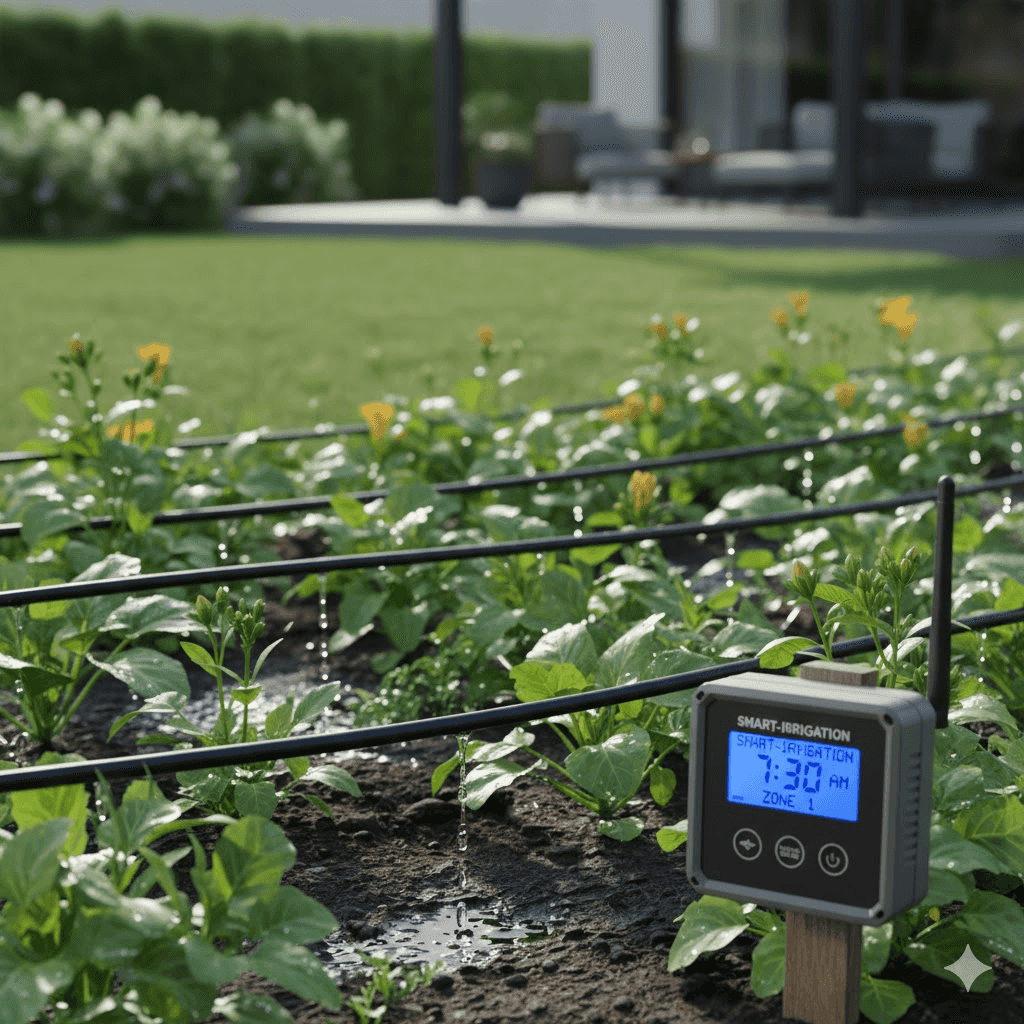
- Drip Irrigation
- Delivers water directly to plant roots.
- Reduces water loss due to evaporation.
- Improves nutrient absorption.
- Sprinkler Systems
- Simulates rainfall for uniform water distribution.
- Reduces soil erosion compared to flood irrigation.
- Can be automated with timers.
- IoT-based Soil Moisture Sensors
- Measures soil moisture in real-time.
- Ensures crops receive water only when needed.
- Prevents overwatering and conserves resources.
- Automated Irrigation Controllers
- Adjust irrigation schedules based on weather data.
- Reduces labor and water usage.
- Integrates with mobile apps for remote monitoring.
- Rainwater Harvesting & Storage
- Collects rainwater for irrigation use.
- Reduces dependency on groundwater.
- Provides a sustainable water source during dry seasons.
Conclusion
Adopting smart irrigation techniques allows farmers to optimize water usage, save costs, and increase crop productivity. Combining technology with sustainable practices ensures better yields and long-term water conservation.